TOP 10 things needed for a Mountain Trek

TOP 10 Things Needed For a Mountain Trek


Check out all the essentials and make sure to prepare and carry all the necessary things for you as you plan your next big trekking adventure. Right from the important things to carry, to basic things which makes a huge difference when you are climbing through the snow…… this list is a lifesaver!

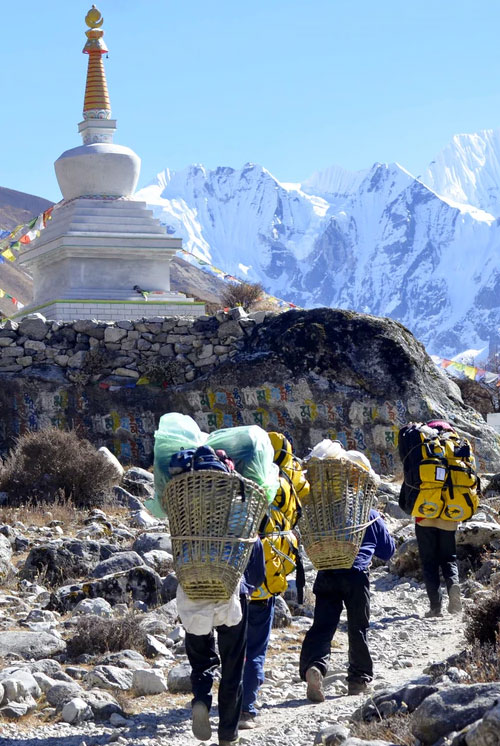
  • Porters at Everest trekking region, Khumbu

    Trek

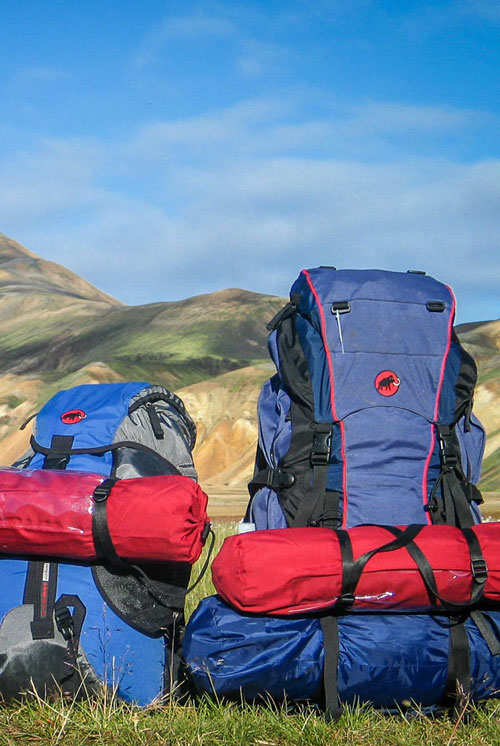
  • Trekkers backpack

    Backpack

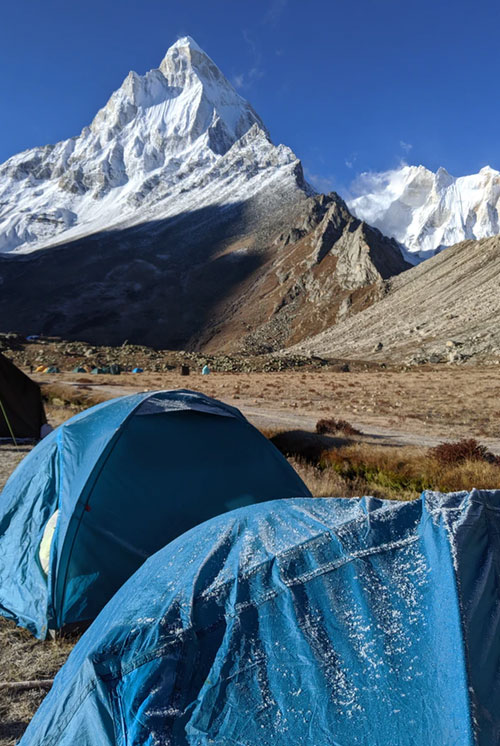
  • Views of Himalayan mountain from tent

    Camping

Warm clothes including

Pack only such clothing that you are comfortable in. Carry something warm and something comfortable including base layers, insulation layer, outer layer, trekking shirts, warm thermal socks, inner gloves and outer insulated gloves, waterproof trekking jackets and trousers.

Personal First Aid

When we say Personal, meaning all medicines you are prescribed by your doctor or meds or supplements that you need every day. While packing all the snow-trek-essentials, these are a few of the things that are usually forgotten by many travellers.

Head Gears

Carry your woollen caps, sun caps, woollen bandanas to cover your face and neck and dark sunglasses that covers your eyes properly to protect yourself from the solar or snow glare.

Hiking Boots, Trekking Shoes

You ought to carry waterproof trekking shoes, which have a great grip. You’ll be able to travel in your sports shoes till the base camp but once you begin your journey further, you must change into your trekking shoes. Investing in a great quality shoe and gear is highly recommended, and make sure you break into your new shoes. A good gear includes a comfortable, lightweight, sturdy, and warm fit, providing good ankle protection and a firm grip on slippery surfaces.

Sleeping Bags

As nights in Nepal, especially in the mountains can get extremely cold, the blanket provided by the mountain lodges may not be enough. Thus, we suggest you carry a duck or goose down sleeping bag.

Trekking Poles

You should choose to buy trekking poles or hiking poles which are lightweight, adjustable, foldable and have some shock absorbent capabilities. It gives you stability, some comfort, and support to your knees and legs on all types of terrain.

Sunblock

Whenever hiking or trekking in the open, you should always protect yourself from the direct exposure of skin to the sun and continually retouch your high SPF sunblock. Sometimes the sunburn can be terrible and lead to long term diseases, hence if you are too much into hiking and trekking then buying a cap or hat will help you in a long way.

Headlight

In case it gets late or dark while coming back from the day’s climb, a torchlight or electric lamp can be a lifesaver. Something your trek organizer should take care of but carrying a head torch of your own will spare you the discomfort of the used one.

Water Bottle & Thermos

Carrying at least two water bottles of a litre each and a thermos will add to your convenience. One of the most important things is Water bottle, which will sustain in the harsh conditions too. When you are hiking, your body dehydrates, but most times, due to cold or cool temperatures, you do not realize that you are sweating. Hence, sipping water from your bottle frequently will keep you hydrated.

Backpack

While buying your backpack, you should check its straps, some side pockets and departments are provided and if it has a supporting frame fitted into it. This will help you organize your things in it. Investing on a good quality is recommended as it would help you feel light and less sweaty on the back. A good backpack must protect your gear or items from at least light rain/snow and also provide easy access or organization of your items.

Similar blogs

View all

Continue reading

Annapurna Circuit Trek

Annapurna Circuit Trek (12 to 18 Days)
Recommended: October to November OR March to April


Views of Himalayas

One of The Best Teahouse Treks That Also Takes You Over a High Mountain Pass.

Day 1: Besi Sahar to Bhulbule (2 ½ Hrs)

After a bus ride to Besi Sahar, the trek begins. Take the dirt road to Bhulbule or cross over to the other side of the Marshyandi river. The first village reached is Khudi after which comes Bhulbule (840m). At Bhulbule you enter the Annapurna Conservation Area but the check point is at Dharapani. Mountain views dominate.

Day 2: To Ghermu (5-6 Hrs)

Follow the trail on the east bank of the river enjoying views of mountains. Past the bamboo groves and a steep climb lies Bahunedanda (1270m). There are panoramic views after climbing further up. A steep descent is followed by a climb to a ridge leading to the village of Kanigaon. Soon after, Ghermu (1140m) is reached.

Day 3: Ghermu to Tal (5-6 Hrs)

The trail drops and leads to a suspension bridge over the Marshyangdi at Syange. Next, you walk through a steep canyon. After another descent, Jagat is reached. From here the trail descends further down to Ghatta Khola. There are many lodges along the way. Walking past a bamboo grove and rhododendron trees you enter Manang District and finally reach Tal (1700m) below a large waterfall.

Day 4: To Chame (6 ½ – 7 ½ Hrs)

The trek to Chame (2710m) is long but you can overnight at one of the places along the way such as Timang, Koto or Karte. You’ll be passing through many suspension bridges. After going through Dharapani and Bagarchap, you arrive at Chame where there are plenty of lodges and a bank where you can change money. There’s a hot spring nearby and views of Lamjung and Annapurna mountains.

Day 5: Chame to Upper Pisang (4-5 Hrs)

Views of Manaslu and apple orchards before arriving at Bhratang following a 1 ½ hr walk. An unforgettable sight awaits – a rock face that rises 1500m from the river called Paungda Danda. First Lower Pisang (3240 m) is reached. The lodges at higher levels at upper Pisang have better views of the mountains.

Day 6: Upper Pisang to Manang via Ngawal (6-7 Hrs)

The longer, higher route is better than the shorter route. The trail rises above the Mring Tso (lake) and finally descends to Ngawal. You then come across the picturesque village of Bragha (3470m) where you’ll find a most interesting Bragha Monastery. Just a short climb later you arrive at Manang (3540m). Annapurna and Gangapurna mountains loom large as they are only 8 km away.

Day 7: Acclimatization in Manang

You can visit Milarepa’s cave nearby as you need an extra day in Manang or Bragha for acclimatization. Manang to Khangsar (1 ½ to 2 hr): The trail descends and then climbs again after crossing the Jarsang Khola. After the pine forest and wheat fields you arrive at Khangsar (3745m). Tilocho Lake is a good side excursion although a tough one.

Day 8: Manang to Letdar (3 ½ – 4 ½ Hrs)

You leave the Marshyangdi valley behind as you climb up. The vegetation changes to shrub and Letdar (4230m) provides the last accommodations before Thorung la (the pass).

Day 9: To Thorung Phedi (2 Hrs)

Walk along the banks of the Jarsang khola, cross over and climb up to Thorung Phedi (4540m).

Day 10: Thorung Phedi to Muktinath & Ranipauwa (6–8 Hrs)

Get advice from locals about weather conditions, snow conditions and avalanche before heading off to Thurung la (5416m). The climb is steep and the weather can change or too much snow can block the path. In such conditions one must return to Phedi. The climb to the pass can take anywhere from 3 to 5 hr. Amazing views of Annapurna, Gangapurna, Manang, the Kali Gandaki valley and more. The descent to Muktinath (3800m) is difficult. There are no accommodations near this famous temple so carry on to Ranipauwa (3710m).

Day 11: Ranipauwa to Kagbeni (2 ½ – 3 Hrs)

Enjoy the outstanding views as you look down toward Jharkot. The trail descends down the Jhong valley to reach green Kagbeni (2840m).

Day 12: Kagbeni to Jomsom (2 ½ – 3 ½ Hrs)

You will be well advised to start early to avoid the strong winds that come up the valley after 11 am. You can visit the Bon village of Lubra before reaching Jomsom (2760m).

Day 13: Jomsom to Marpha (1 – 1 ½ Hrs)

A very short hike which ends after crossing the Pankya Khola. Marpha (2680m) is known for its unique alcoholic drinks made from apples, apricot or peach.

Day 14: Marpha to Larjung (3-4 Hrs)

Take the alternative route via Chhairo and Chimang to avoid traffic on the main road. Pass through Tukuche’s stone houses. Enjoy the views of Dhaulagiri and Nilgiri North peaks. Around Larjung (2560m) there is much to explore especially the meditation caves.

Day 15: To Ghasa (5-6 Hrs)

Walking through Lete and Kalopani, you reach Ghasa (2000m) the last Thakali village and also the point from where the landscape changes to subtropical.

Day 16: Ghasa to Tatopani (4 ½ – 5 ½ Hrs)

You can avoid the main road and follow the mule trail. Tatopani (1190m) gets its name from the hot springs nearby where you can take a dip.

Day 17: Tatopani to Ghorepani (6-7 Hrs)

It is possible to catch a bus from here to Beni or Pokhara, but you’ll miss great views of mountains and rhododendron forests. A hard climb uphill leads to Ghorepani (2750m). An early morning visit to Poon Hill rewards you with spectacular views of the Dhaulagiri massif and some of the Annapurna peaks.

Day 18: Ghorepani to Naya Pul (6-7 Hrs)

An early descent from Ghorepani means you’ll be back in Pokhara via Naya Pul with plenty of time on your hands.

The Annapurna Circuit Trek is widely regarded as one of the finest treks in the world, easily comparable to legendary treks such as the Everest Base Camp Trek or the Langtang Valley Trek. The journey allows you to learn about the amazing cultural and traditional lifestyles of both Hindus and Buddhists. You’ll travel through a range of temperature zones, from the greenery of the Annapurna Conservation Area to the rarefied air of the high-altitude mountains itself.

Similar blogs

View all

Continue reading

Janakpur Dham – City of Ponds

Janakpur Dham | City of Ponds


Janakpur, also known as Janakpurdham, was founded in the early 18th century. It is a sub-metropolitan city in Dhanusa District of Nepal. This city is located about 225km south-east of Kathmandu. Janakpur is the third largest city in the Terai region after Biratnagar and Birgunj, and it is the seventh largest city in Nepal. The five major rivers surrounding Janakpur are Dudhmati, Jalad, Rato, Balan and Kamala. The climate here is humid-subtropical. It is one of the fastest developing cities of Nepal.

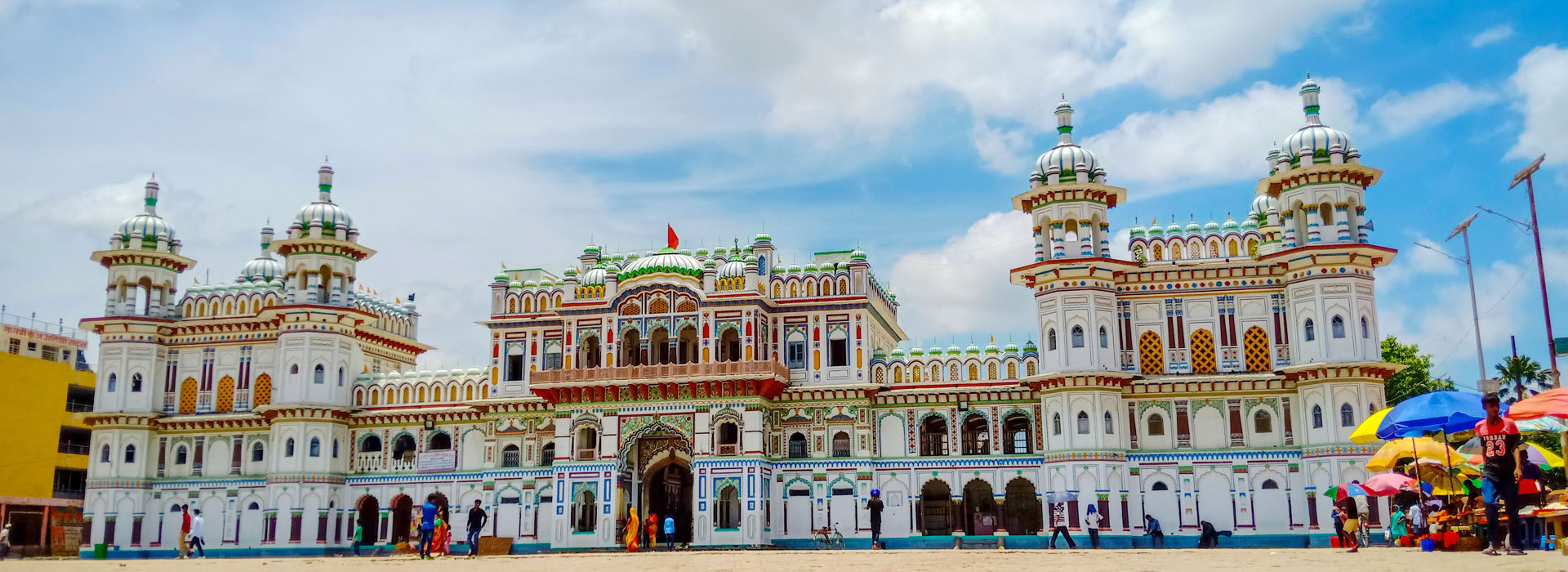
  • Janaki temple, Janakpur

    Janaki Mandir

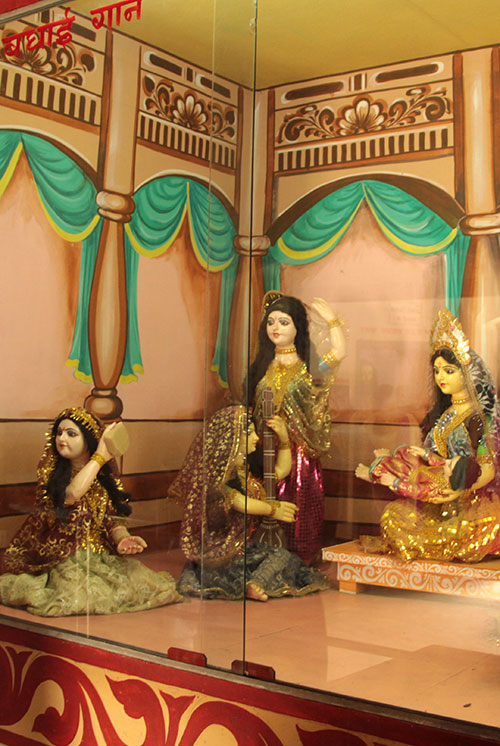
  • Statue at temple in Janakpur

    Mandir

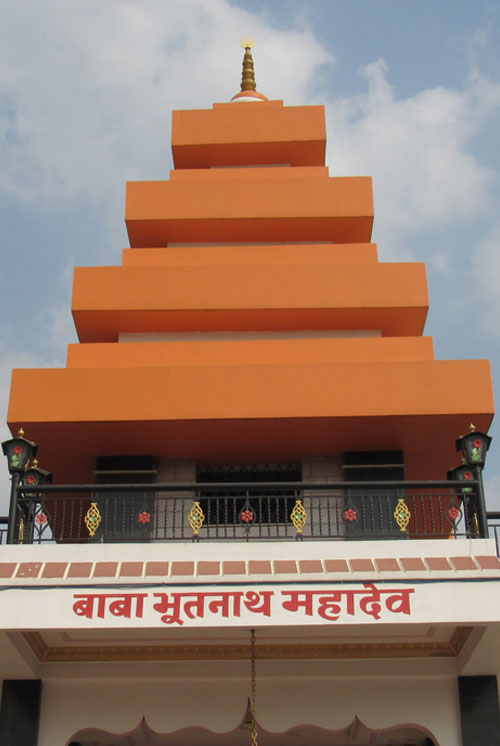
  • Baba Bhutnath Mahadev, Janakpur

    Swargdwar

Diverse ethnic groups of people live in the district of Dhanusha such as the Yadavs, Brahmins, Kyastha, Tharu, Musahar, Rajput and Chetris. This city has a number of good schools, colleges, health care facilities and parks as well. People mostly rely on tourism, agriculture and local industries for their economy. Mithila Art, which is famous all over the world is made by Maithili women of Janakpur. The grand Ram Janaki Temple is located in the center of the city and it draws large number of visitors every year.

Janakpur is an important pilgrimage site for Hindus due to its connection with the Hindu epic, the Ramayana. It is believed that Goddess Sita was born here and it is the place of her marriage with Lord Ram. Janakpur possesses more than seventy ponds and it is also known as City of Ponds. Thousands of tourists come to visit this holy city every year. The pleasant weather, the grand and colorful festivals throughout the year, the stunning architecture of the temples and the friendly locals make Janakpur a favourite spot for tourists. But Janakpur is not just about temples and monuments. The city is well known for its rich cultural history, arts, language and literature. It is the heartland of the Mithila civilization, a melting pot of diverse cultures, religions and opportunities.

Some of the must visit places in Janakpur are:


Janaki Temple, Janakpur

Janaki Mandir

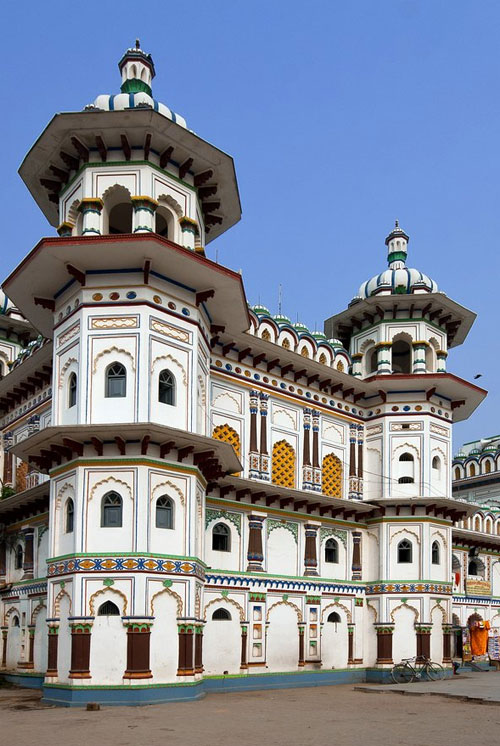
It is one of the renowned Hindu temples which is dedicated to Hindu Goddess Sita. It is also named as Nau Lakha Mandir by the locals as the cost for the construction of the temple was nine lakhs. Queen Vrisha Bhanu of Tikamgarh, India built the temple in 1911 AD. It is constructed in the mixed style of Mughal and Hindu architecture. It is a three-storied structure and it is made entirely of stone and marble. There are 60 rooms that are decorated with flag of Nepal, colored glass, engravings and Mithila paintings, with beautiful lattice windows and turrets. In 1657, a golden statue of the Goddess Sita was found and Sita is said to have lived there. Janaki or Sita, had chosen Lord Rama as her husband during her engagement.

Their marriage ceremony had occurred in the nearby temple which is called as Vivaha Mandap. Pilgrims and travelers from all the corners of the world visit this sacred Hindu Temple especially during November and December for Vivah Panchami. It is the city’s annual festival in which the marriage of Sita and Rama is celebrated with numerous sacred rites and rituals. During the festival, the temple is decorated with special arts, lights and bhajans are sung daily. We can experience the euphoric as well as the spiritual atmosphere around the temple’s premises.

Ram Mandir

This temple was built by Amar Singh Thapa in dedication to Ram, the prince of Ayodhya. The Ram Mandir is about 10-minute walk from Janaki Mandir, right opposite Dhanusagar. At the right side of the temple there are many stone idols of the Lord Shiva. The main festivals celebrated in Ram Mandir are Ram Navami and Vivah Panchami. As Ram Navami is the birth tithi (date) of Ram, special bhajans are sung on the day. On Vivah Panchami, some special traditional codes are performed between Ram Mandir and Janaki Mandir as marriage codes to be followed.

Ram Mandir at Janakpur

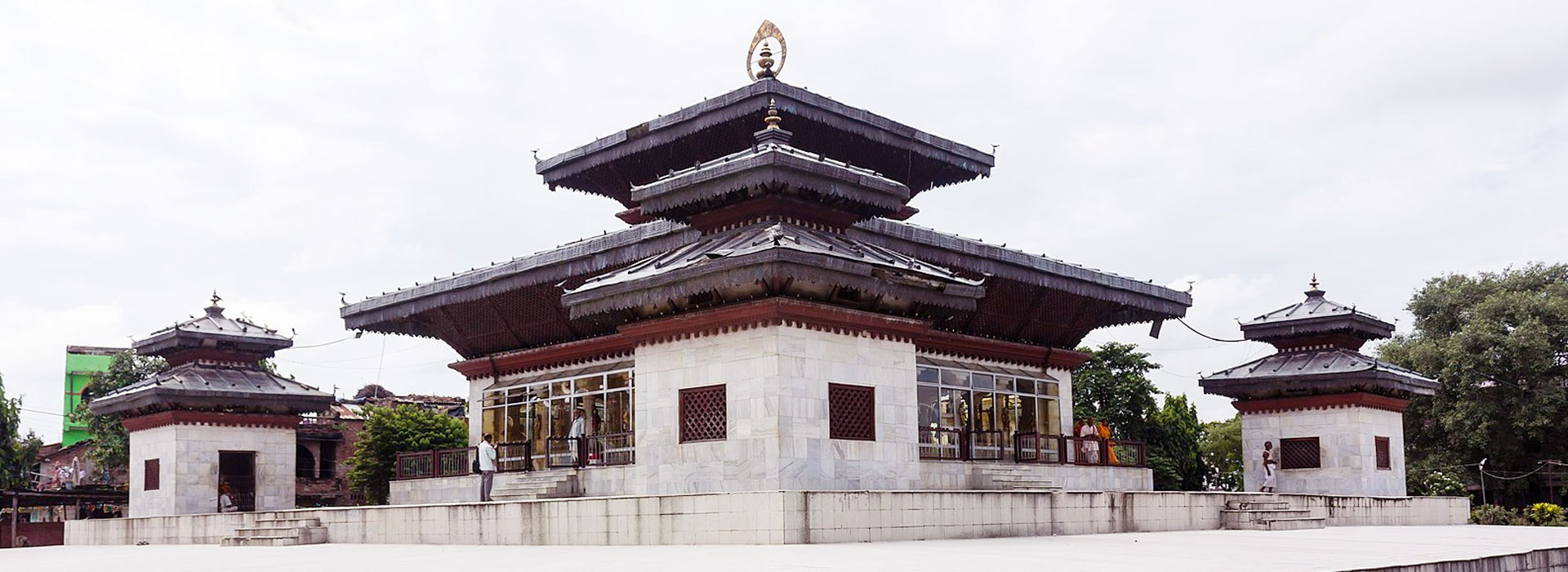
Vivaha Mandap

Vivaha Mandap also known as Ram Sita Vivaha Mandir, marks the spot where Lord Ram and Sita got married. In this temple we can find the scene depicting the actual marriage. Demigods are also seen on the pillars, who came to witness the great event.

Gangasagar

Gangasagar is the holy pond in Janakpur which is located near Ram Mandir. It is believed that the water for this pond has been brought from the Ganga. This pond looks magical at night time. It is beautifully decorated during Chhath festival. Visitors can also enjoy a boat ride on the pond, even during the aarti time.

Swargdwar

It is located at the west bank of Gangasagar. Swargdwari means Swarg (The Heaven) and Dwar (gate). So, this place is considered as a gate to heaven for the dead people.

Women Development Center

It is a non-profit center that provides skills and business trainings to women so that they can earn their independent livelihoods. Initially women were taught paper art typical to the Mithila region but now they are given trainings for sewing, screen-printing, ceramics and paintings as well.

Janakpur is a holy city where one can experience diverse culture, tradition, religion, arts and languages. The best season to visit Janakpur is May, July and August.

Similar blogs

View all

Continue reading

Visit Nepal 2020

Visit Nepal 2020


Visit Nepal 2020 banner

Nepal is exceptionally gifted in culture, heritage, and nature. From small alcoves of deities nested within the busiest streets of Kathmandu to the seven historic world heritage sights, Nepal is a prized destination, which is both amusing and budget-friendly. Home to Mt Everest, many travelers come to Nepal in hopes of scaling it. Nepal’s terrain is very favourable for treks and hence many travelers come here to be one with nature, as an escape from the urban city life.

The earthquake of April 25, 2015, that struck Nepal killed 8686 people leaving thousands injured and many more homeless. The rural parts of Nepal and the historic sights are still recovering from the damage caused by the incident. The resulting year saw tourist’s number declining low in the preceding six years and therefore Visit Nepal 2020 campaign wants to be the backbone to support the fragile economic conditions here in Nepal. With enhanced publicity through visit Nepal 2020, we aim to host two million tourists in 2020 which is roughly double of last year’s number. More than the number of tourists, visit Nepal 2020 wants to disseminate the message that Nepal is not only an astounding destination for travelers but also for investors who want to do profitable business in the travel and tourism industry. Through visit Nepal 2020 we grasp the opportunity to spread our tourism industry to remote corners of the country through destination development programs. This campaign aims to see a greater share of tourism industry in Nepal’s GDP, (since nepal has an unmatched advantage).

Visit Nepal offers unforgettable moments and lifetime experiences where humans and gods share the same grounds, with different jatras( festivals) . You will come across stories of Divine Gods and Goddesses as you walk the boulevards and back roads of Nepal. Where each day may be a celebration of life, there are various celebrations all through the year. The sounds of drums and cymbals, the woodwind players, the conceal artists and the calm murmur of sacrosanct chants penetrate the chatter in parades and parades that celebrate the culture and legacy of the country. Nepal is home to the living Goddess, the Kumari – incarnation of hindu goddess Durga, who is adored and worshiped by aficionados over the nation.

Not only does visit nepal 2020 give a sneak peek on the diversity in culture and ethnicity of the country but also an escape from the main city,to the forests and conservation areas beyond the valley for wild encounters. Here people get to see the lavish wildernesses of the national parks in Chitwan, Bardia and Rara on elephant backs or jeep safaris to spot rhinos brushing within the wild, crocodiles along swampy streams, and tigers on the lurk. The wetlands of the Koshi Tappu Save are a bird watchers charm. Up within the mountains of Manang, you’ll take after the path of the mountain goats, yaks and the slippery snow leopards. Wake up to the sounds of the woodland and sink into the evening with an astonishing nightfall.

Visit Nepal 2020 looks forward to polishing all the uncovered facets. Its commitment is to improving its competitiveness through investment, innovation, infrastructure development, regulatory reform, new item offerings, environment and wildlife conservation, with greater efficiencies and excellence. The whole world is definitely aware about the presence of the great Mt. Everest here in nepal, but other than that nepal has the most number of elevated mountains, awe-inspiring trekking trails, where mountain climbers, trekkers and explorers look out for the Himalayas each year amidst climbing season. Nepal also offers a few of the finest white water enterprises – rafting and kayaking on exciting waters and delicate rapids. Earth biking, skydiving, Asia’s moment most elevated bungee bounce, the world’s highest hotel and tall elevation races make the nation one of the foremost sought out for goals for an adrenaline rush.

Being the birth place of lord Buddha and home to lord Shiva, Nepal shows religious tolerance between Buddhist and Hindus. People can travel Nepal for genuine self-discovery. The scent of incense, supplication banners within the wind, the chime of distant bells, butter lights, the turn of supplication wheels and magical chants penetrate centers of otherworldly learning, religious communities and temples. From high quality lokta paper to woven Dhaka shawls and pashmina, from aesthetic silver and metal product to stone carvings, wood works and depictions, many such wonderful crafted works prosper in nepal.

Followed the diversity in culture and ethnicity comes along the delicious nourishments as well. From multi-cuisine, specialty restaurants and bars to home-cooked meals from traditional kitchens, there’s a huge variety of street food to choose from. In particular, momos are definitely a favourite amongst the Nepalis. Momos are conventional dumplings that can be found in farther tea houses and with rise to élan at all eateries. From naturally caught stream fish to dried smoky meats and yak cheese, from crisply developed plant vegetables and herbs to crunchy mountain apples, from domestic brewed spirits to the wonderful determination of teas, there’s many options for your tastebuds to explore.

Coming to Nepal is coming to an encounter that’s memorable. From the remotest corners to the urban scene, Nepal encapsulates a tactile encounter of colours, sounds, sights and tastes.Visit Nepal 2020 invites you to life’s extraordinary minutes and invites you to our magical country for unforgettable and memorable, life time experiences.

Similar blogs

View all

Continue reading

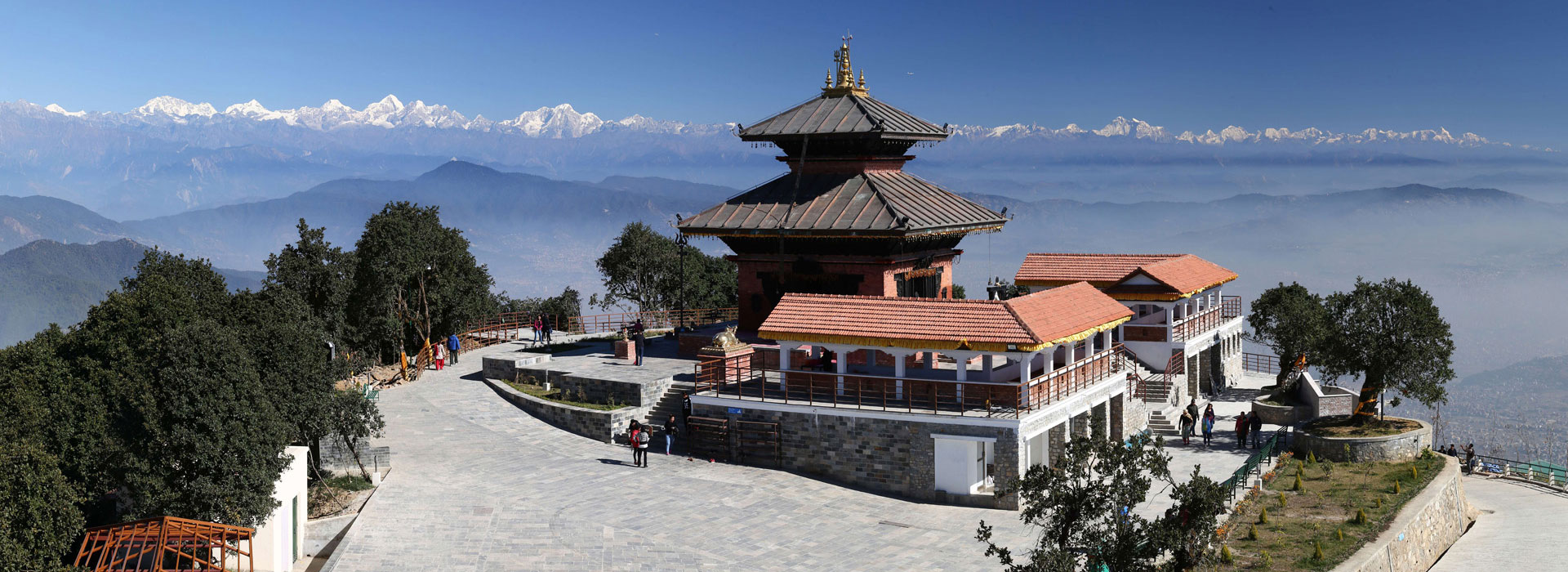
Immerse yourself in the beauty of Chandragiri Hills

Immerse yourself in the beauty of Chandragiri Hills


View of Himalayas from Chandragiri Hills, Kathmandu

Chandragiri is a municipality in Kathmandu District. The city’s main attractions include Chandragiri Hill, Nepal with its Cable Car. Chandragiri Hill is 16 kilometers from Central Kathmandu, lies on the South-West of Kathmandu Valley and is 2551 meters from sea level. It is one of the four hills that surround Kathmandu valley including Shivapuri (2732m), Phulchowki (2695m) and Nagarjun (2095m).

Chandragiri can be reached via cable car, driving or hiking. The second cable car in Nepal after Manakamana was commenced through this route. The cable car route is around 2.5 km and it takes about 9 to 14 minutes depending on the wind speed on the cable car. It is a thrilling and fun-filled experience to see Kathmandu valley, the landscape and the mountains from the cable car. The hill provides panoramic views of Kathmandu valley and the Himalayan ranges from Annapurna to Everest. It is an easy one-day trip from Central Kathmandu Valley. Chandragiri Cable Car runs from Thankot to Chandragiri hills. The cable car system consists of 38 gondolas that can carry 1000 people per hour.

Chandragiri Hills is one of the Nepal’s most loved day-trip destinations. It is also a famous hiking destination in Nepal. Walking around the hills provides a breath of fresh air, and you get to see the natural beauty of the country side and breath taking scenes. The main destination of Chandragiri Hill is the mountain top from where the spectacular views of the great Himalayan mountain ranges can be seen. The green valley of Kathmandu lies at the bottom where you can see the growing urbanization.

Chandragiri hilltop is a major tourist attraction, with an excellent combination of natural beauty and cultural significance. The best time to explore and visit Chandragiri is during spring and fall season. In winter season one can sometimes experience snowfall as well. To fulfil the cultural diversity of the place, the Bhaleshwar Mahadev Temple stands at the Chandragiri Hill and is an extremely pristine shrine. The temple features two levels in the typical pagoda-influenced Nepalese architecture, wooden grid windows and wall carvings of different gods and goddesses. Outside the temple, there is a statue of King Prithvi Narayan Shah standing against the white mountain peaks in the distance. It maintains its historical importance as it was said that King Prithvi Narayan Shah prayed here before the unification of Nepal and conquered Kathmandu Valley. It is also believed that he meditated on the hilltop and got blessings from Bhaleshwar Mahadev for his devotion. After Prithvi Narayan Shah unified the country, he used Chandragiri Hill to be one of the four trade passes.

Chandragiri Hills Private Limited operates the cable car with recreation centers, restaurants and shops on the hilltop. There is a plan to build an amusement park, organize paragliding and zip flying adventures. You can find many shops that promote local and branded products here. There are other cafes and food stalls in and around the place. This place has been designed to be friendly for differently-abled people as well. The paths and pavements are made easier for the elderly to walk around without too much of stress and effort. This place has gained popularity among the locals as well as the tourists in a short span of time. It is a must visit place at least once for all the nature, history and culture lovers.

Similar blogs

View all

Continue reading

Gorkha – Land of The Brave

Gorkha Land of The Brave


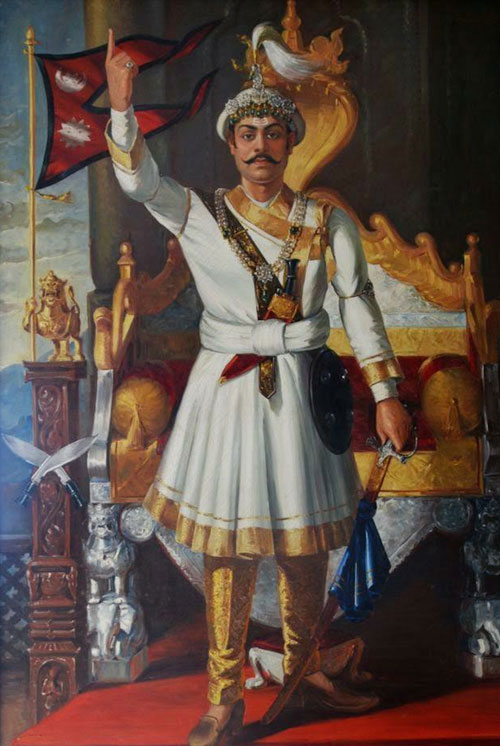
Known as the land of brave warriors and the birthplace of King Prithvi Narayan Shah who unified Nepal, Gorkha is where the history of Nepal began. A part of the Gandaki Pradesh and one of the 77 districts of the country Gorkha is also world-famous for the Nepalese soldiers recruited by the British and India as Gurkhas. The name Gurkhas or Gorkhali is what represents Nepalese indicating the bravery of the soldiers who fought with great courage and honour. Gorkha has a lot to offer to the people who visit here. The unbelievable Gorkha Durbar of Shah Regime which survived many battles, the Gorkha Bazaar filled with local people and local items, the antique Gorkha museum, the beautiful view of Himalaya ranges, the heavenly Mount Manaslu and many trekking routes. The roots of Gorkha are very much connected to the past. So if you connect with history then this place will definitely take you to a different time interval.

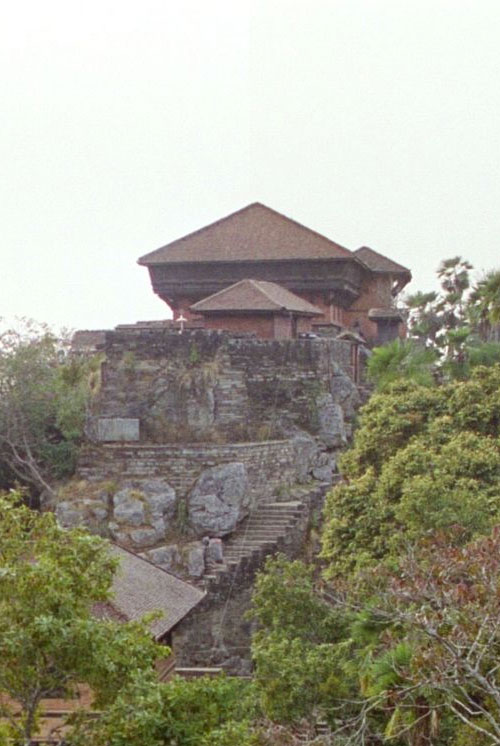
  • Gorkha Durbar

    Gorkha Durbar

  • King Prithvi Narayan Shah, founder of Nepal

    Prithvi Narayan Shah

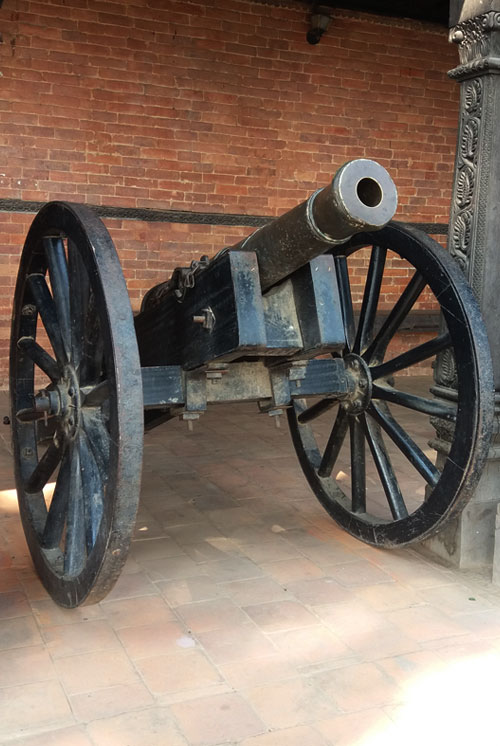
  • Cannon at Gorkha Museum, Gorkha

    Museum

Sadly, the devastating earthquake of 2015 brought lots of damage to this area as it was the epicenter. Lots of houses were wiped out and many were in critical stage. In spite of all these hurdles today many houses have been rebuilt with the help of funds and the tourist areas have been renovating. Gorkha has again leapt forward with its beauty to win over the tourists.

The major attractions of this place are:


Gorkha Durbar

Gorkha durbar is the historical palace where the Shah dynasty began its regime. Being on top of a fortified hill, the palace is one hour walk from the bus station. As you start your walk you will come across many villages and the local people. After reaching the top, breathtaking views of Mount Annapurna, Manaslu and Ganesh range awaits for you. One can also see the Trishuli River glistening in the sunlight. The crafting of the palace is done by the best craftsmen of that time. The palace is a fort as well as a temple so leather shoes and belt are to be removed before entering. The western part of the palace is where the temple of Goddess Gorakhkali found.

Gorakhnath Cave

Below the southern part of the palace approximately 10 meters is the sacred cave of sage Gorakhnath. It is believed that King Prithvi Narayan Shah valued and bowed to Gorakhnath baba. The cave is carved out by hand from a big rock and is said to have religious importance.

Gorkha Museum

At the central part of the Gorkha Bazar in a grand Tallo Durbar, you will find the Gorkha Museum which has a collection of artifacts and achievements of Gurkhas during the war. Tickets are to be taken in order to enter the museum and photography permissions for those who want to click pictures. The museum also has a collection of weapons used during the war. The cannons highlight the museum.

Bhimsen Temple

Dedicated to the Newari God of commerce Bhimsen, the temple is a miniature pagoda. It is said that if you throw a coin inside then you will have a good fortune. Visitors visit the temple with great belief.

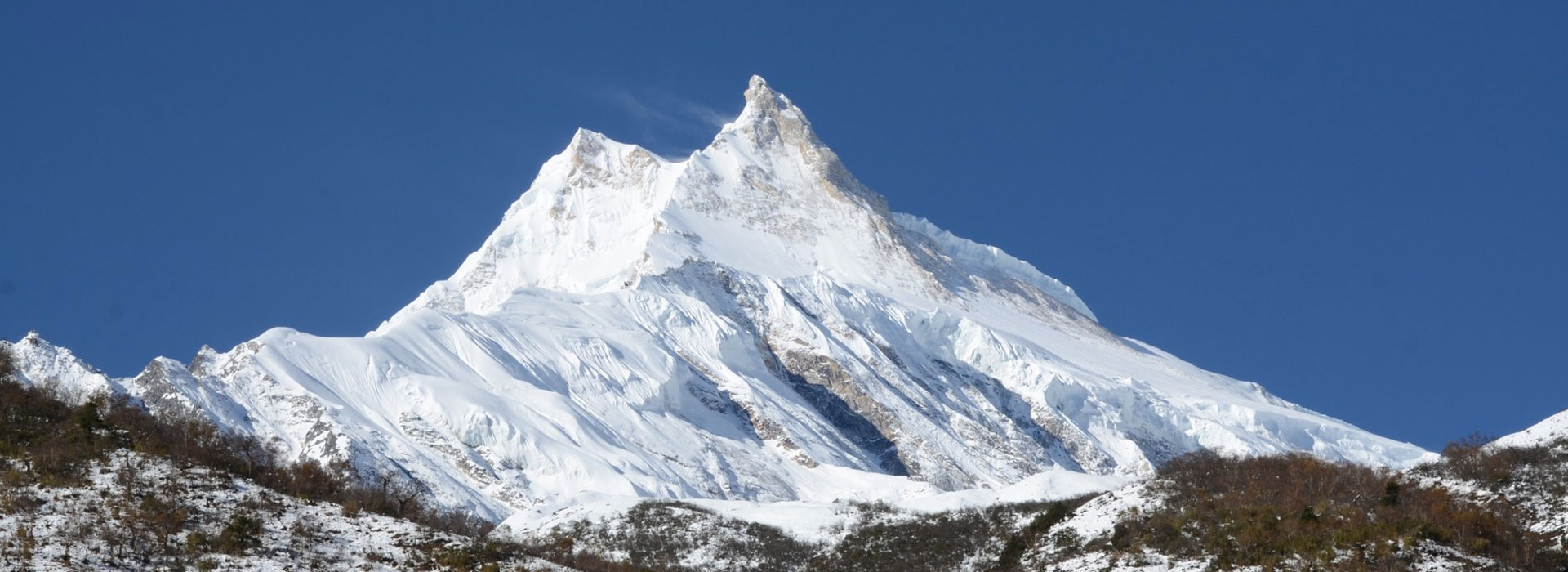
Mount Manaslu, Gorkha

Mount Manaslu

Eighth highest Himalaya in the world Mount Manaslu is one of the major attractions of this place. It offers a variety of trekking options to the tourists who visit this place. One can hire a guide and enjoy the trek to the mountain for a new adventure.

Ganesh Himal

Named after the Hindu deity Ganesha, the Ganesh Himal slightly resembles an Elephant from the southern belt. Many tourists come here to get a lifetime experience of climbing a mountain. By hiring guides or mountaineers you can be a part of the thrilling trek.

Dudh Pokhari

On the border of Lamjung is the challenging trek to Dudh Pokhari. History says that the mother of the kings of Gorkha and Lamjung had dropped her breast milk in this lake to stop the fight between two brothers. The lake is said to be the spirit pond where people come to take bath and cleanse their sins. Also, the view of the Himalaya range from this spot is worth admiring.

Gorkha is a package full of diversity. There is history, amusing bazaars, snow-white mountains, adventurous trekking routes, temples and many places to discover. Also, Gorkha is not just a place; it is the identity of Nepalese people as well. Many have witnessed or learned about the bravery of the Gurkhas in the battlefield. People are definitely eager to visit this place as the place has many songs about the battle and triumph to sing.

Similar blogs

View all

Continue reading

Bandipur, an Absolute Gem

Bandipur, an Absolute Gem


Bandipur is a hilltop settlement and a municipality in Tanahun District, of Nepal. It is 143km west of Kathmandu and 80km east of Pokhara. It is a trading route between India and Tibet. It is famous for its Newari people and their culture. Today its population is about 10,000 native Newars. It is one of the best and famous tourist destinations of Nepal. The history of Bandipur begins in the 19th century when the Newars from Bhaktapur arrived. Before that it was mostly inhabited by the Magars. Now, Bandipur is home to many ethnic groups like Brahmins, Chhetries, Newars, Damais, Kamis, Sarkis, Magars, Gurungs and Kasais. After Prithvi Narayan Shah defeated Kathmandu valley, the Newar merchants chose Bandipur as a trade route between northern hills and southern flatland. The merchants built their houses in such a way that the houses reflected their style, architecture and culture. Thus, the houses consist of pagoda styled roofs, lattice windows and ornate doorways.

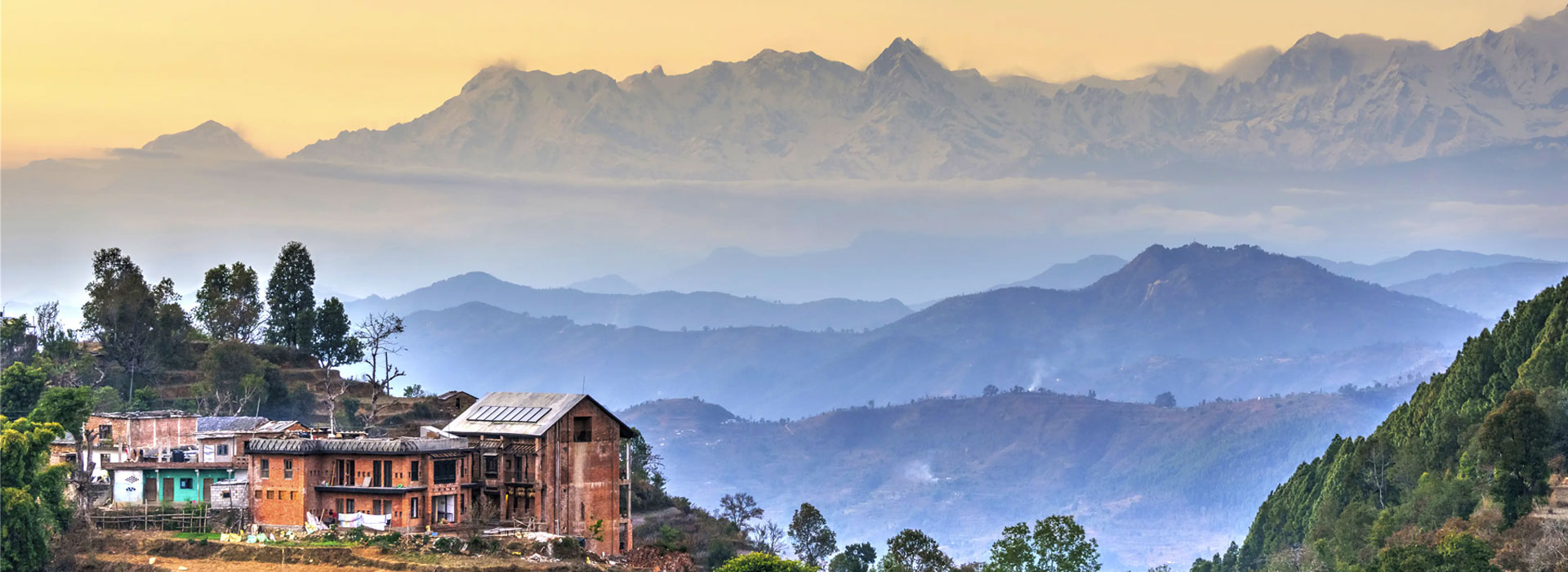
Bandipur, famous hill station in Nepal

Bandipur is an aesthetically beautiful and quiet town. Its cultural heritage and architecture hasn’t been changed till now. From Bandipur, we can get excellent views of some Himalayas like Dhaulagiri, Annapurna, Manaslu, Ganesh, Langtang, etc. The Newari town of Bandipur is one of central Nepal’s hidden gems. It combines traditional village architecture, beautiful Himalayan views, countryside walks, local adventure sports and some excellent accommodations. Bandipur has also retained its old temples, shrines, sacred caves, innumerable festivals and its Newari architecture.

Bandipur’s cultural and historical site attracts large number of tourists every year.

Some of the must visit places in Bandipur are:


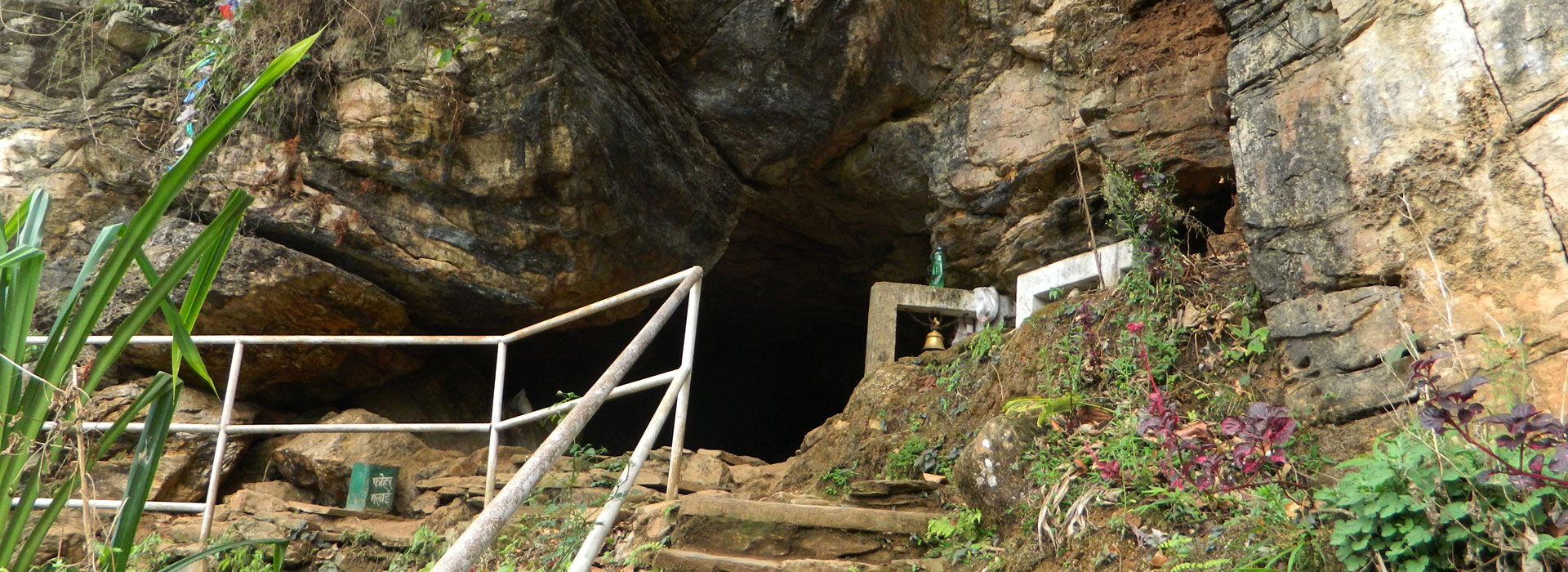
Siddha cave, largest cave in Nepal

Siddha Cave

The Siddha Cave is the largest cave of Nepal. The cave is 50 meters high and 437 meters deep. The Siddha Cave is famous as a hiking route among the visitors. Inside the cave, there is a Shiva Linga, Lord Ganesh face structure and a swimming pool.

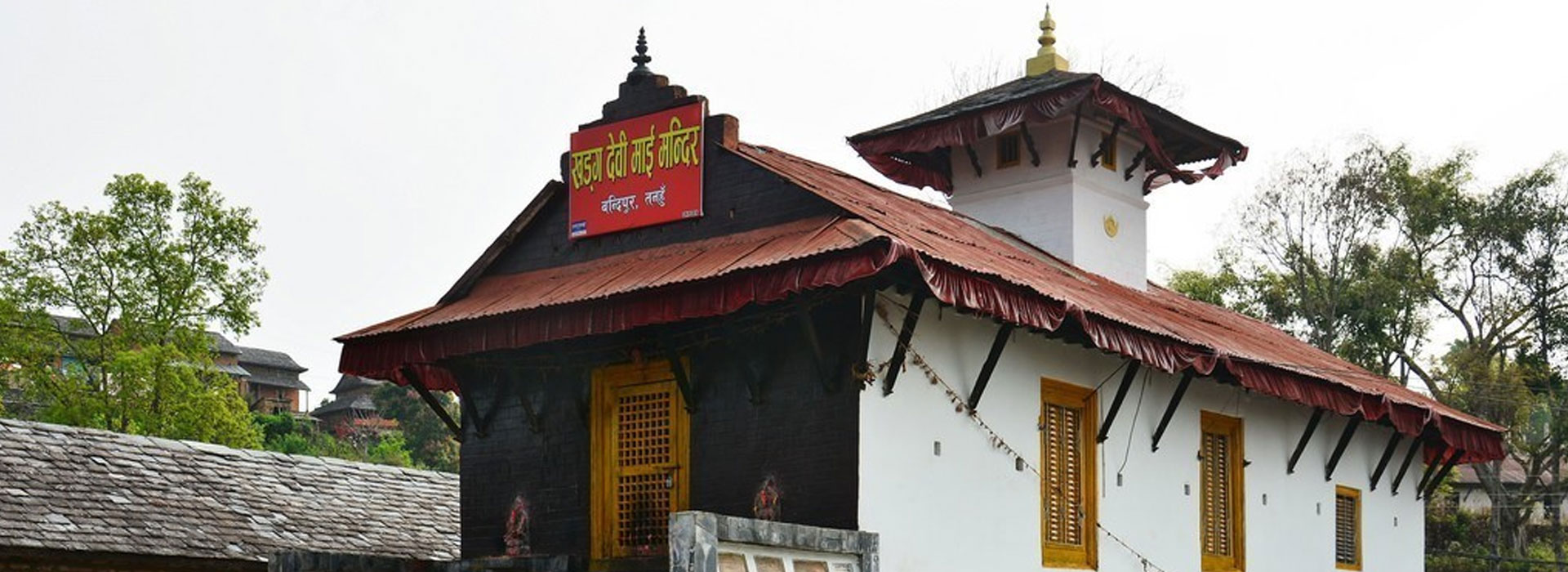
Khadga Devi Temple, Bandipur

Khadga Devi Temple

Khadga Devi Temple is one of the historic places in Bandipur especially for the Shrestha of Newar community. In this temple, a sword of the 16th century king, Mukunda Sen is preserved. It is believed that the sword was gifted to the king by Lord Shiva. The temple demonstrates woman power where Khadga Devi means the goddess of sword. The temple is located at high altitude and also provides a fantastic view of the mountains and the beautiful Bandipur village. This temple opens only on the day of Fulpati of Dashain festival.

Padma Library

The Padma Library is at the center of Bandipur Bazaar. It reflects the power of Bandipur during the Rana time. The library contains books from the time of Rana administration. It is famous for its architecture and design.

Tundikhel

There is a large ground on the north of Bandipur Bazaar named as Tundikhel. Once this area was known for trading and parade ground for Gorkha soldiers. But now it is a viewpoint from where we can get the enthralling views of surrounding mountain ranges, we can see Dhaulagiri, Manaslu, Machhapuchhare, Ganesh Himal and Langtang ranges. This place is also famous as a spot to view the sunrise and sunset.

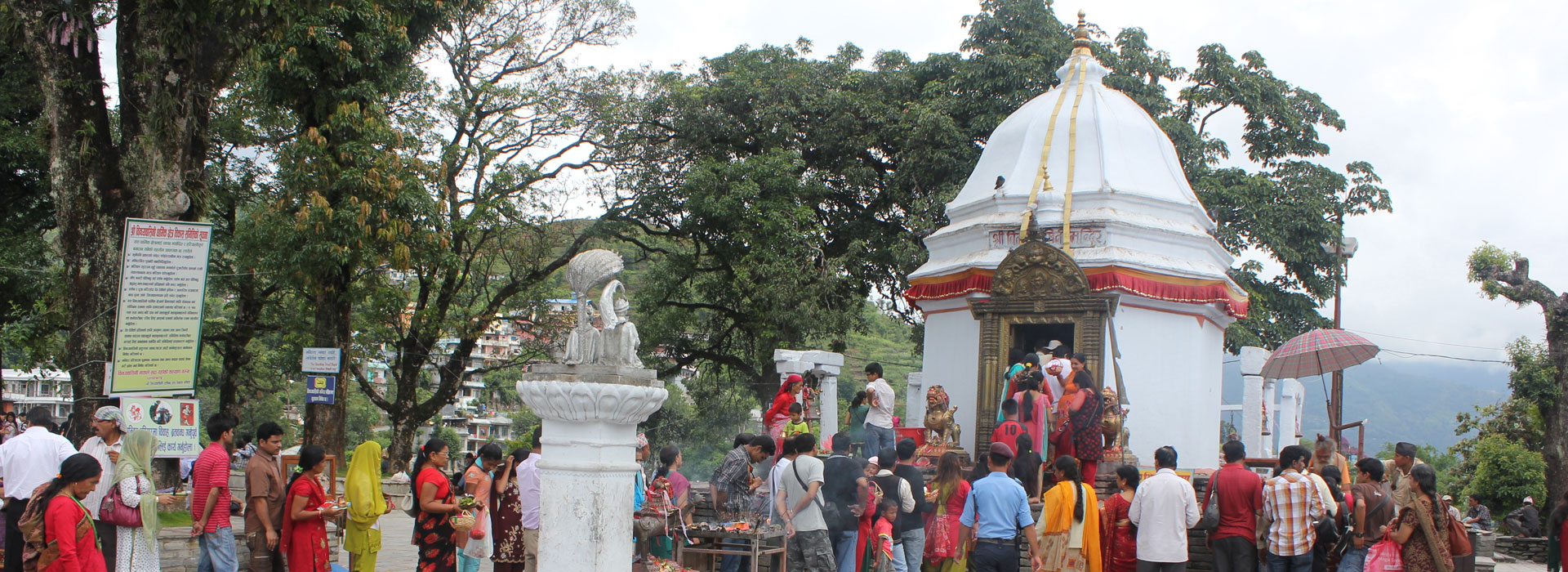
Bindabasini Temple, Bandipur

Bindabasini Temple

It is located in the northern part of Bandipur Bazaar. The main attraction of the temple is its walls adorned with mythic scriptures and beautiful architectural styles. It is built in pagoda style. The people keep the picture of the goddess Bindabasini in a chariot and pull the chariot during the celebration of New Year.

Silkworm Farm

In silkworm farm there is a silk production factory that demonstrates the detailed process of manufacturing silk from the silkworm. At the farm, there are many orchards of mulberry plants which are used to feed the silkworm.

Thani Mai Temple

Thani Mai Temple is a famous religious spot of Bandipur on a hilltop. This place is also a best viewpoint for sunrise and sunset views. It offers breathtaking view of the mountains and the village downhill for the visitors.

Bandipur dotted with numerous mountain ranges, viewpoints, and greenery valley offer many things to do. From trekking to hiking and many other things can be enjoyed here. Different viewpoints of Bandipur attracts tourists with mesmerizing views of the Himalayan ranges and panoramic views of Bandipur from high altitudes.

The best time to explore the beautiful Bandipur is from January to April and from October to December.

Similar blogs

View all

Continue reading

Peaceful co-existence of Hinduism & Buddhism

Peaceful co-existence of Hinduism & Buddhism | Kathmandu


History

Kathmandu valley was once a giant lake until the waters were drained through the Chobhar gorge in the south west. Legend has it that Manjushree cut open an outlet at Chobhar and people settled in the fertile valley which was the beginnings of a whole new civilization. Art and music flourished in the 19th century largely patronized by royalty. The Newar population that inhabited the valley was to a large extent engaged in farming but they were and are also excellent artists, builders and craftsmen. They enjoy an unusually large number of religious festivals unique to the valley, during which they feast endlessly on cuisine quite different from that of other Nepalis. The valley was once ruled by herders known as Gopalas until they were ousted by the Kirantis who are said to have ruled for more than 5oo years. They were in power during the time of the Mahabharata. The Kirantis were finally conquered by the Lichhavis whose temples and water systems remain to this day.

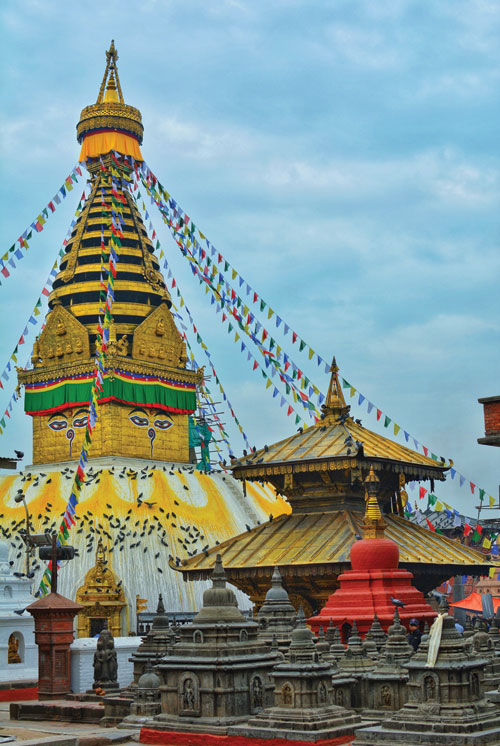
  • Swoyambhu Stupa, an UNESCO heritage site

    Swyambhyu

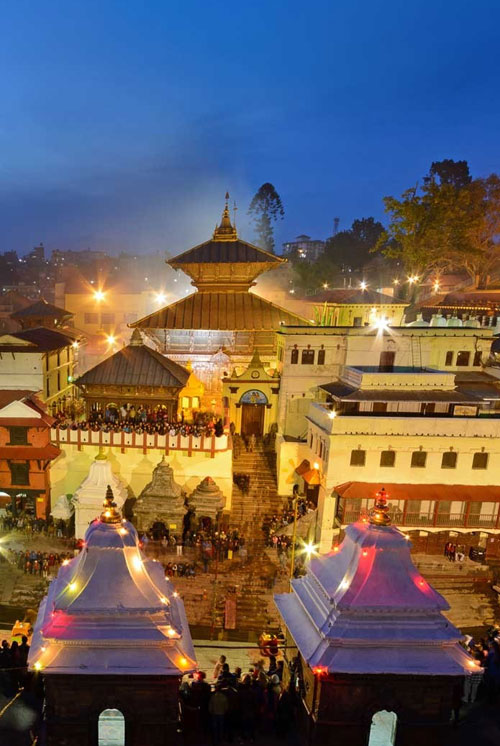
  • Pashupatinath Temple, an UNESCO heritage site

    Pasupatinath

  • Bouddha Stupa, an UNESCO world heritage site

    Boudha

They were followed by the Malla kings whose reign brought in the Golden period when local art and architecture reached its pinnacle, capturing the hearts of visitors even to this day. Much of what this dynasty introduced in the form of architecture such as the temples, palaces and palace squares, religious festivals such as Gai Jatra, the cult of the Living Goddesses and much more make up the bulk of Nepal’s proud heritage. The Shah dynasty from the kingdom of Gorkha captured the entire valley, subjugating and banishing the Malla rulers from Kantipur, Lalitpur, Bhadgaon and Kirtipur. But the Shahs were not to rule for long. An exceptionally shrewd and power hungry Prime Minister wrested power from the ruling monarch and his queen, establishing a hierarchical rule of Rana Prime Ministers while keeping the kings on the throne as puppet rulers with no power whatsoever. However, by 1950, the Shahs managed to win back their right to rule with the help of their subjects and disgruntled Ranas. But, history was to repeat itself, after taking back power from the Ranas, they were to finally give it up once and for all in 2005, losing power to the democratic forces who now had the country firmly in their grip. Nepal is now a federal republic.

Places to see: World Heritage Sites


Pashupatinath Temple, an UNESCO world heritage site in Kathmandu

Pashupatinath Temple

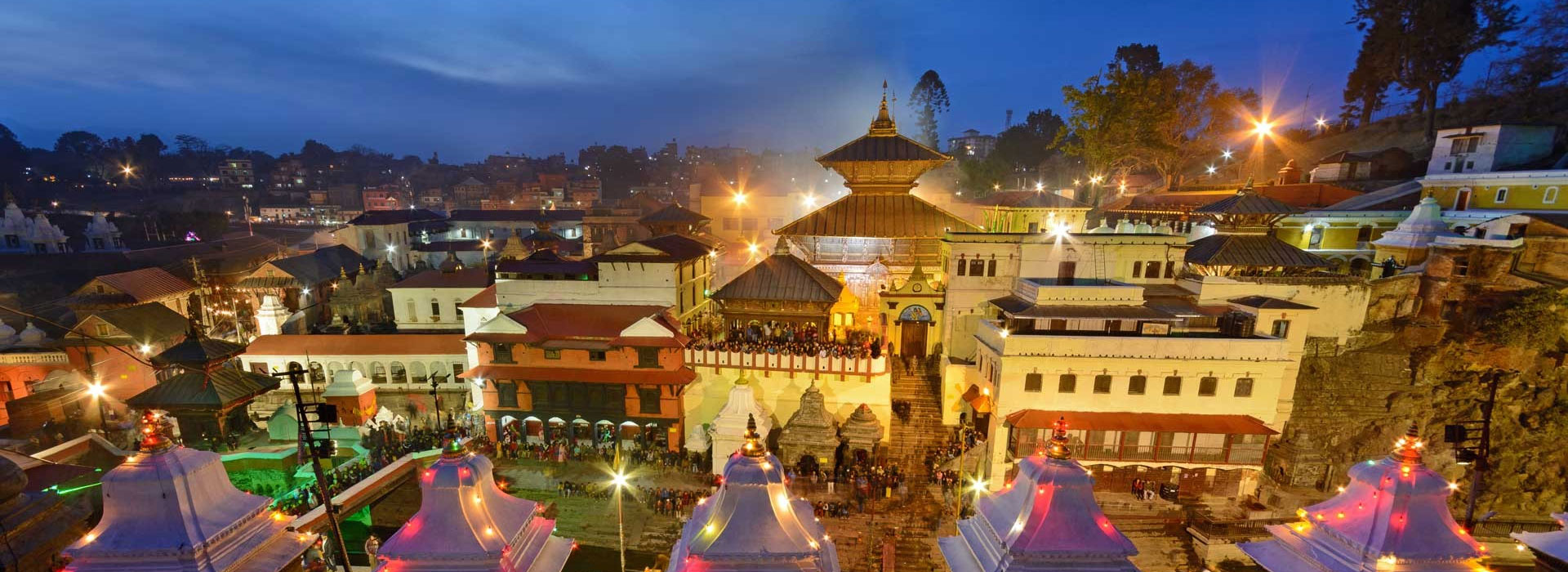
The holiest of Hindu shrines devoted to Lord Shiva, Pashupati draws the largest crowds of devotees and has vast tracts of land under its jurisdiction. The deceased are brought here for cremation along the banks of the Bagmati and many Hindu festivals bring devotees here for a dip in the river and to pay homage to their god Shiva. The largest crowds gather here for Shivaratri ‘the night of Shiva’ in the beginning of spring when along with devotees, sadhus (the holy men) arrive here in great numbers from India.

Boudha Stupa, an UNESCO heritage site in Kathmandu

Boudha

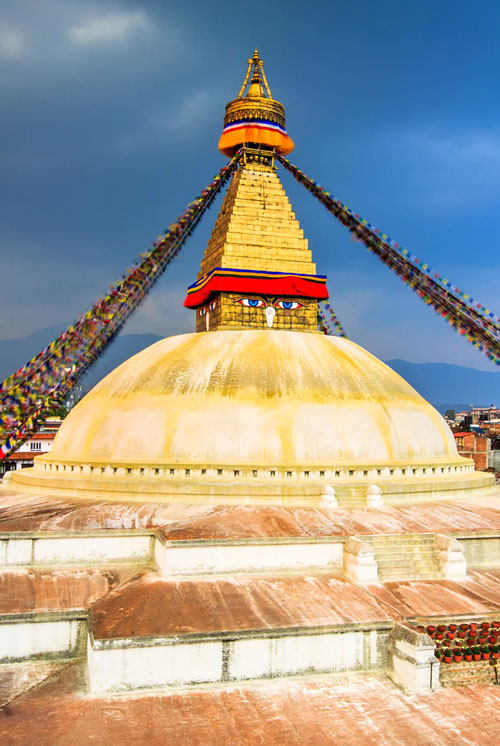
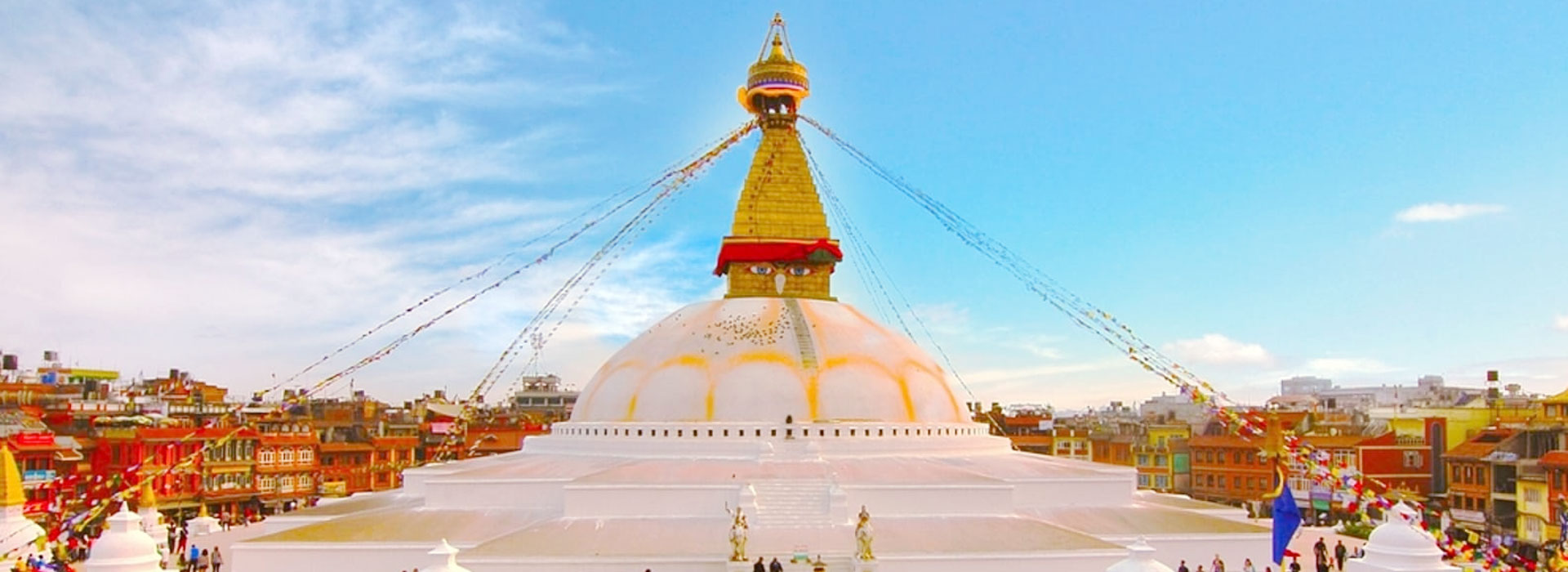
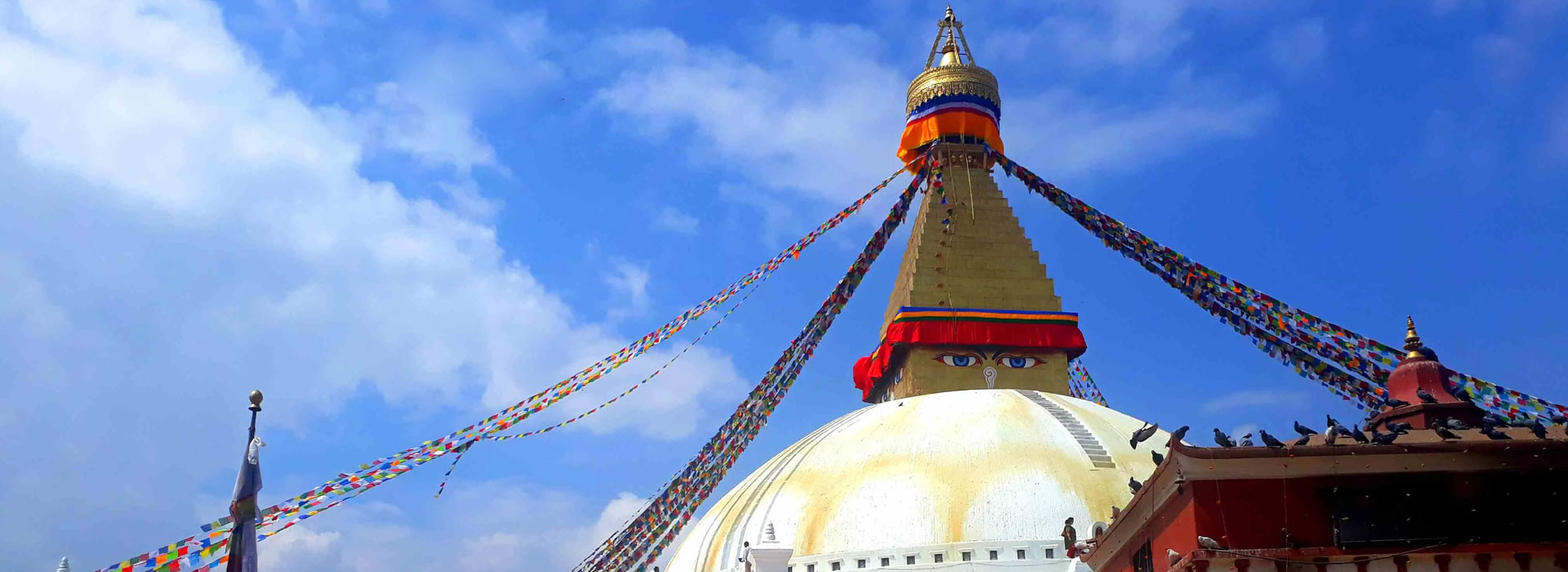
The largest stupa in Nepal, Boudha is not very far from Pashupati and should be included in the same tour. This magnificent shrine has been an important pilgrimage site for Buddhists from around the world and especially from Tibet where Buddhism reached its pinnacle. In the vicinity of the stupa are many monasteries where hundreds of monks reside and foreigners take up courses in Buddhist studies. The largest crowds of devotees descend here for the Lhosar (the Tibetan New Year) festival in late winter or early spring.

Swoyambhu Stupa, an UNESCO world heritage site, in Kathmandu

Swoyambhu

Yet another powerful shrine and also one of the oldest, Swoyambhu is dominated by the Newar Buddhists. Perched atop a small hill, it is seen from most parts of the city and has a circular road around it for circumambulation where devotees are seen from early morning. A big draw for pilgrims from around the world, a near vertical staircase leads straight up to the stupa but there are also easier approaches. A great view of the city can be had from the shrine.

Durbar Square and the old Palace


One of the city’s major attractions, Durbar Square showcases the artistry of the Newar artisans going back many centuries. The square is a treasure trove of woodcarving and metal craft that embellish the windows and doors of the remarkable temples as well as the Hanuman Dhoka Palace (an image of the god Hanuman can be seen near the door (“dhoka” in Nepali). The palace houses interesting museums dedicated to the Shah kings and was once the seat of power where the coronation of these monarchs also took place until 2001 when the last king was crowned.

Patan Durbar Square, an UNESCO heritage site

Patan Durbar Square

Similar to Kathmandu Durbar Square, Patan Durbar Square is a living museum enriched by art represented in the wood-carving, stone carving, metal work and superb architecture of the temples built centuries ago. Part of the old Malla era palace has been converted into a museum that showcases the art of old Lalitpur. The outstanding Krishna temple in stone is worth a visit.

Bhaktapur Durbar Square, an UNESCO heritage site

Bhaktapur Durbar Square

The most spacious of the three palace squares of the valley, the Bhaktapur Durbar Square also has fewer temples but more space for people to sit around. The major attractions are the Golden Gate and the Fifty-five windows of the old palace. Worth a visit is the Art Gallery which houses some ancient artifacts. The art around Durbar Square is quite exceptional especially in the form of metal craft which includes some fine repouse work. This is where the remaining Malla kings took their last stand against the invading Gorkha army and lost their kingdoms.


Changu Narayan temple

Not far from Bhaktapur and accessible by car or bus, is one of the oldest temples of the valley, the Changu Narayan dedicated to Lord Vishnu. Standing majestically on a hilltop, it overlooks a large part of the valley and boasts some wonderful sculptures. Eateries, souvenir shops and hotels line the steps leading up to the shrine. Built in the Lichhavi period, it dates back to the 4th Century AD.

Similar blogs

View all

Continue reading

Explorations to the East of the valley

Explorations to the East of the valley


East of Kathmandu, there are some medieval Newar towns full of narrow alleys, old brick houses and plenty of folklore. But as you climb up, the view to the north on a clear day is one to die for. With a regular influx of tourists, Nagarkot and Dhulikhel both known for spectacular views are not only popular destinations but are full of upscale resorts, hotels and all manner of eateries. On the other hand, Panauti attracts a different set of visitors; those with an interest in architecture, culture and history.

views of Himalayas from Nagarkot, Nepal

Nagarkot

Let’s start with the most popular hill station on the outskirts of Kathmandu Valley. 32 Km east of the Capital city, Nagarkot (2,175m) undoubtedly is the first choice for most people, locals and foreigners alike, if they want to escape the smoke and dust besides the overcrowded streets and the chaotic traffic of Kathmandu. Spend a night here to enjoy a spectacular sunrise, which is what Nagarkot is famous for, besides the sweeping views of the Himalayan chain of mountains. Yes, the panoramic view is stunning and the air, refreshing. The sight of the Annapurnas, Hiunchuli, Ganesh and Langtang Himals along with lesser peaks is enchanting and on a very clear day, even Everest is visible in the east. The viewing tower which is about an hour’s hike up from the center of Nagarkot, has the best views, but can get crowded. However, there are plenty of alternative view- points.

This peaceful getaway is also the ideal place for short hikes as there are many hiking trails in and around Nagarkot that lead to interesting places in the vicinity. You can hike to Sundarijal via Chisapani and enter the Shivapuri National Park or opt to go down south to Dhulikhel, the other popular tourist destination and enjoy spectacular views along the way. The trails around the area will also take you through pristine forests, opening up to villages that are home to mostly Tamang people.

Mountain biking trails around Nagarkot are very popular among bikers who crave that adrenaline rush as they navigate the rough terrain up and down the hillsides. Then there are folks who come for family picnics, office day trips or a lively gathering of friends.

From Nagarkot, drive down or hike to Changu Narayan, one of the oldest temples in Nepal built during the Lichavi period, and from this hilltop temple, Bhaktapur seems like the obvious place to go next; an ancient, charming city that’s only a 20-minute drive away.


Dhulikhel

Dhulikhel (1550m) is one of the easiest getaways to reach by road as it lies close to the Arniko Highway, 30 km southeast of Kathmandu. Also known for spectacular panoramic views of snow covered mountains; Langtang Lirung (7,227m) in the west, through Dorje Lakpa (6,966m) to the huge bulk of Gauri Shankar (7,134m) and nearby Melungtse (7,181m), and as far as Numbur (5,945m) in the east are all visible from here. But unlike Nagarkot, Dhulikhel is a Newar town where traditional Newari art and architecture are still well preserved, mostly showcased in the temples, wood-carved windows and doors.

Early risers can enjoy the most memorable sight of the sun coming over the mountains, coloring the snowy peaks in changing colors of red, orange and yellow. Yes, join the famous Sunrise Hike and walk through town, then climb up a long flight of stairs to reach the Kali Temple on the summit. The viewing tower here is damaged but you still get a fascinating sunrise over the row of mountain peaks from nearby view-points. The sleepy Dhulikhel town below is a wonderful sight.

Once an important trading center along the ancient India-Tibet trade route, Dhulikhel still lies beside the highway to Tibet and anyone going to Khasa has to drive past the little town. But today, Dhulikhel is more famous as a destination for tourists to gaze in awe at the mountains from this vantage point. Spread in and around the town are a large number of resorts and up market hotels that cater to all the needs of the visitors. An hour’s drive from Kathmandu, Dhulikhel has many temples of interest and a laid back, tranquil atmosphere for tourists to enjoy.

From Dhulikhel, a day trip to Namobuddha (either by car or a pleasant hike), a popular Buddhist pilgrimage site is worth the trouble. Its claim to fame is that once upon a time, a highly regarded Boddhisatva is said to have offered his own flesh to a starving tiger and on that very spot, the stupa was built. After visiting the revered stupa and nearby monasteries, one can return to Kathmandu via the old Newar towns of Panauti and Banepa. The Arniko Highway has become busier since the opening of the B.P. Highway which veers off to the right just before reaching Dhulikhel.


Panauti

Panauti is an ancient town 32 Km southeast of Kathmandu. When King Yakshya Malla, the 15th Century ruler of Kathmandu valley decided to divide his kingdom among his children, Kathmandu, Bhaktapur and Patan (Lalitpur) were handed over to his sons while his only daughter was given Panauti. Situated between the confluence of two rivers – Roshi and Punyamati, this old town is known to have been founded long before by Ananda Deva, who united several scattered villages in 1006 AD. One of the interesting facts about this town is that since it is believed to rest on one solid rock, earthquake impact is far less than in other areas that were severely damaged during the tremor of 2015.

Time seems to have stood still here in Panauti as life in this little town has changed little for its simple folks. Take a tour of the town, and you will notice the slow pace and medieval ways of the locals. There are many temples to explore and admire such as the Unmat Bhairab with wood carved windows and tiled roofs. The stone sculptures remind you of the ancient art world of stone carvings that once dominated the field of architecture. Panauti’s Indreshwar Mahadev temple dedicated to Shiva and built in 1294, is the oldest standing pagoda in Nepal.

7 km south of Banepa, Panauti boasts a rich history and the town’s culture has been well preserved. After enjoying the peaceful ambience and admiring the craftsmanship of its wood and stone carvers, you can head out in the direction of Namobuddha or Dhulikhel, walking through verdant rice fields. They are both good hikes. Or you can go via Banepa and drive back to Kathmandu along the Arniko Highway.

Similar blogs

View all

Continue reading